Category Archives: Wavelengths

Image

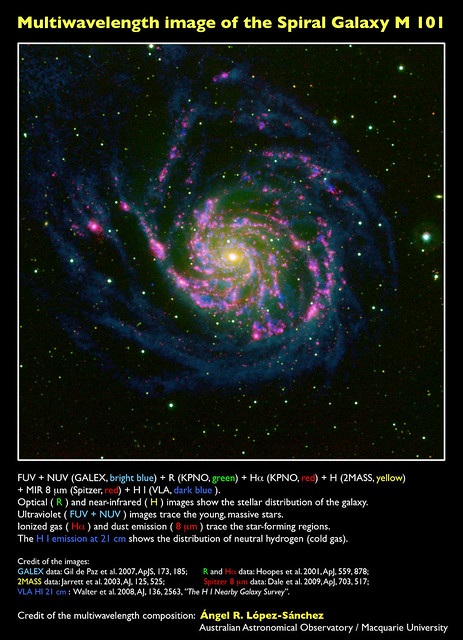
Multiwavelength image of the spiral galaxy M 101

Multiwavelength image of nearby spiral galaxy M 101 combining ultraviolet (light blue), optical (green), near infrared (yellow), H-alpha and 8 microns mid-infrared (red) and 21 cm HI emission (dark blue). Each colour prepresents an important component of the galaxy: massive stars (light blue), stars (green and yellow), star-forming gas and dust (red) and neutral hydrogen (dark blue)

Compare with the Astronomical Picture of the Day on 13 July 2012 apod.nasa.gov/apod/ap120713.html

Data credit: UV data (GALEX): Gil de Paz et al. 2007, ApJS, 173, 185; R and Hα data (KPNO): Hoopes et al. 2001, ApJ, 559, 878; Near-Infrared data (2MASS): Jarrett et al. 2003, AJ, 125, 525, 8 microns data (Spitzer): Dale et al. 2009, ApJ, 703, 517; 21cm HI data (VLA): Walter et al. 2008, AJ, 136, 2563, ”The H I Nearby Galaxy Survey”.

Credit of the composition: Ángel R. López-Sánchez (AAO/MQ).

More sizes and high resolution image in My Flickr.

Supernova remnant NGC 2018 with CACTI

Last Thursday 24th November I conducted an outreach exercise while supporting astronomical observations at the Anglo-Australian Telescope (AAT). Using the Australian Astronomical Observatory (AAO) Twitter account I asked people to chose one of 4 given object located in the Large Magellanic Cloud (LMC) to be observed at the telescope with the new CACTI camera while we were changing gratings of the scientific instrument, the spectrograph AAOmega. I’ve called the experiment “LMC Little Gems using CACTI”.

We got 193 votes, thank you to all of you who voted and also shared the post! It was quite exciting, particularly the last 30 minutes when, thanks to some of the best science communicators in Spain (and friends), we got +50 votes!

Well, here are the results:

  1. Cluster + nebula NGC 1949: 22%
  2. Globular cluster NGC 2121: 13%
  3. Supernova remnant NGC 2018: 34%
  4. Cluster + nebula NGC 1850: 31%

I must say my favorite was NGC 1949, but NGC 2018 was also a nice choice.

And the final color image of the object you chose to observe at the 3.9m Anglo-Australian Telescope is:

NGC 2018 - Supernova remnant in the LMC Data taken on 24 November 2016 as part of the AAO Outreach Exercise “Large Magellanic Cloud Little Gems with CACTI”. CACTI camera in 2dF @ 3.9m Anglo-Australian Telescope. Color image using B (6 x 10s, blue) + [O III] (6 x 60 s, green) + Ha (8 x 60 s, red) filters. Credit: Ángel R. López-Sánchez (Australian Astronomical Observatory / Macquarie University) & Steve Lee, Robert Patterson & Robert Dean (AAO) Night assistant at the AAT: Steve Lee (AAO).

NGC 2018, a supernova remnant in the LMC Data taken on 24 November 2016 as part of the AAO Outreach Exercise “Large Magellanic Cloud Little Gems with CACTI”. CACTI camera in 2dF @ 3.9m Anglo-Australian Telescope. Color image using B (6 x 10s, blue) + [O III] (6 x 60 s, green) + Ha (8 x 60 s, red) filters. A high resolution image can be obtained here. Credit: Ángel R. López-Sánchez (Australian Astronomical Observatory / Macquarie University) & Steve Lee, Robert Patterson & Robert Dean (AAO) Night assistant at the AAT: Steve Lee (AAO).

I’ve doing a bit of searching to get some extra information about this object. Indeed, the Large Magellanic Cloud has a high star-formation activity, meaning that star-cluster, star-forming nebula but also supernova remnants are all around the place. However, SIMBAD defines NGC 2018 as Association of Stars, and few references to this object to be a supernova remnant are found (e.g., here).

But looking at the image I can say that this definitively is a supernova remnant, yes, with an associated star cluster too (very probably, the sisters of the massive star that exploded as supernova). How? Well, do you see the filament structure seen in the green colour, that traces the [O III] emission? That is related to a supernova explosion, these features are usually not found in star-forming regions… unless you have a recent supernova explosion, as it is this case!

Thank you very much to all that participated on this outreach exercise! I really hope I can organize another experiment like this sooner than later!

AAT Outreach Exercise: “LMC Little Gems with CACTI”

Today, Thursday 24th November I’m the scheduled support astronomer at the Anglo-Australian Telescope (AAT). It is a “2dF+AAOmega service night”, meaning that I’ll be observing “service programs”, that is, science projects that require less than 6 hours in total to be completed, using the 2dF+AAOmega instruments at the 3.9m AAT.

Additionally, I’ve requested additional ~30 minutes to try to use the new CACTI camera to get a new, nice outreach image of an interesting object. As I did last May I’m asking the public to please provide feedback and help us to decide.

What do you want the AAT observes tonight?

For today’s observations I have chosen 4 objects located in the Large Magellanic Cloud (LMC),  that is why I’ve called the experiment “LMC Little Gems using CACTI”.

The chosen 4 objects are these:

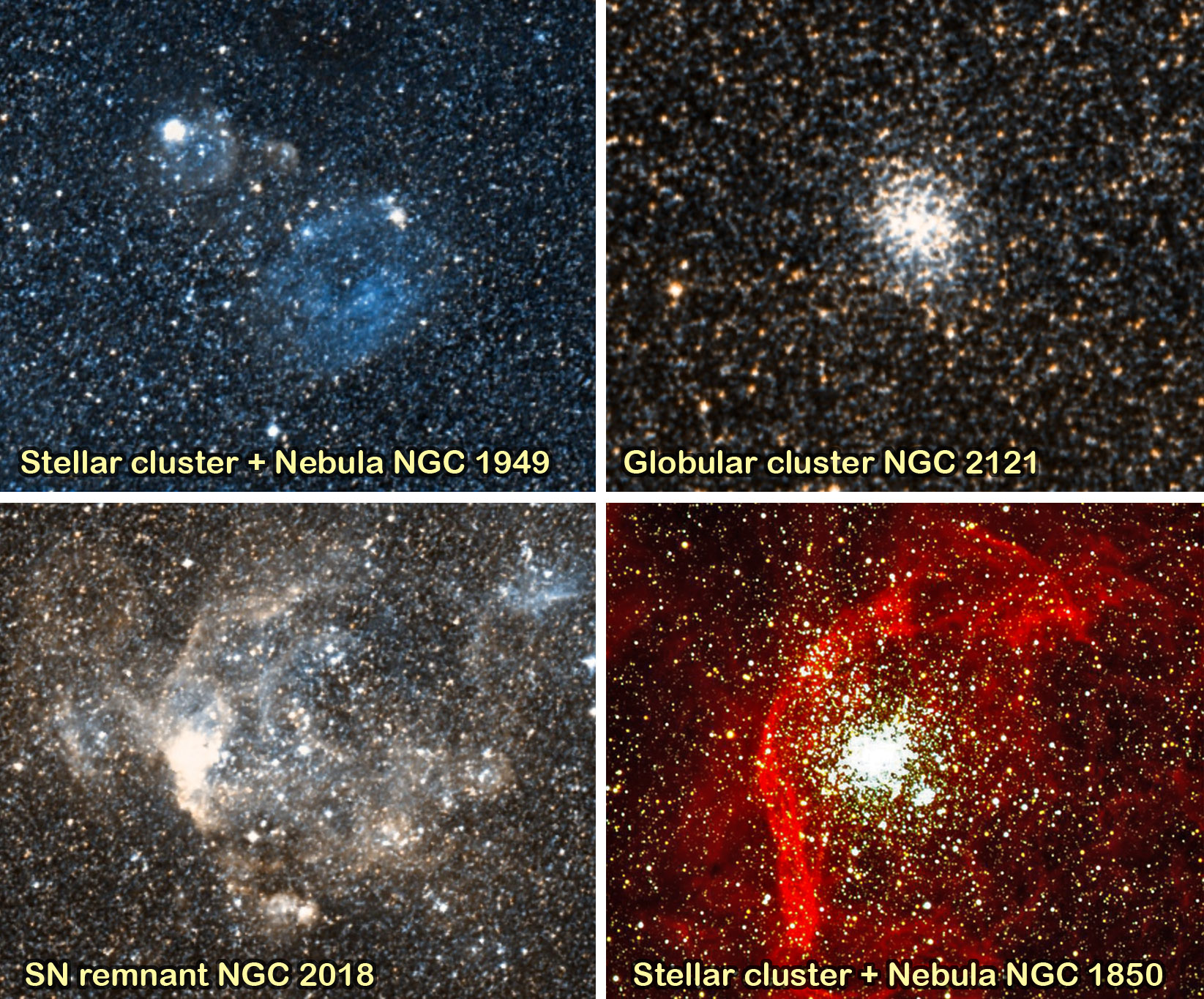
1. Stellar cluster + Nebula NGC 1949
2. Globular cluster NGC 2121
3. Supernova remnant NGC 2018
4. Stellar cluster + Nebula NGC 1850

Objects chosen for the "LMC Little Gems with CACTI" Outreach Exercise at the AAT. From top left to bottom right they are: 1. Stellar cluster + Nebula NGC 1949, 2. Globular cluster NGC 2121, 3. SN remnant NGC 2018, 4. Stellar cluster + Nebula NGC 1850. Credit of the images: Digital Sky Survey, except for NGC 1850 (ESO, image obtained using the FORS1 instrument at the VLT.

Objects chosen for the “LMC Little Gems with CACTI” Outreach Exercise at the AAT. From top left to bottom right they are: 1. Stellar cluster + Nebula NGC 1949, 2. Globular cluster NGC 2121, 3. SN remnant NGC 2018, 4. Stellar cluster + Nebula NGC 1850. Credit of the images: Digital Sky Survey, except for the image of NGC 1850, credited to ESO (image obtained using the FORS1 instrument at the VLT).

I chose objects in the LMC because this region of the sky can be observed during all night this time of the year.

In addition, getting these data for outreach purposes will not interfere too much with the scientific observations, as we need to change the configuration of the instrument (the gratings of the AAOmega spectrograph) and, while the night assistant is doing that, I will be taking the data of the object chosen by the public for this outreach exercise.

So, what do you think? What do you want the AAT observes tonight?

Please use your Twitter account and cast your vote following this link.

Assuming the weather is good and we don’t have any technical problems, I should have a new, nice outreach image obtained with CACTI at the AAT by tomorrow, Friday 25th November. Stay tuned!

Podcast in FBI radio: The Milky Way is missing

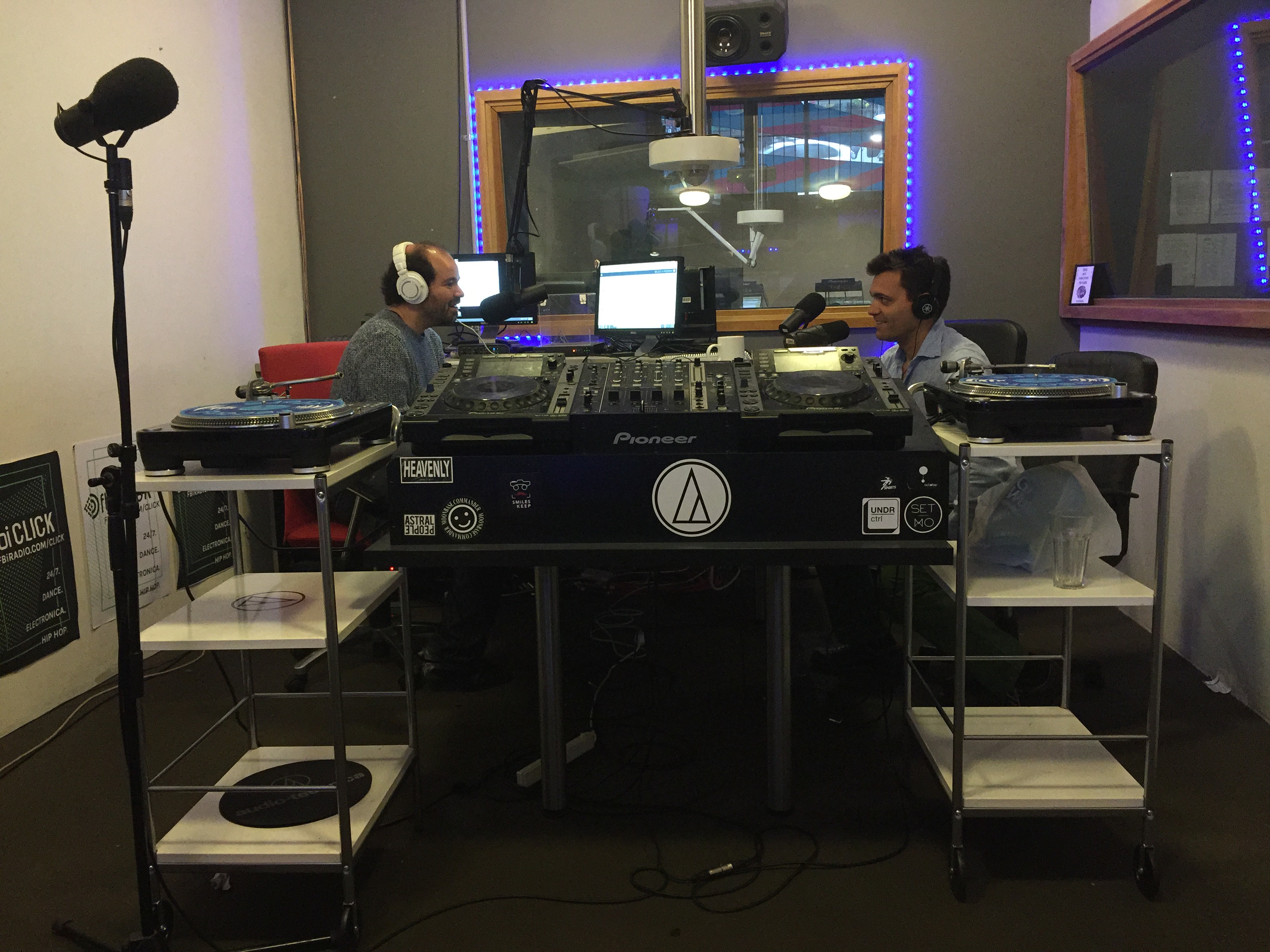
Some few months ago I was interviewed by Zacha Rosen in the FBi’s Not What You Think radio show. I was talking about what a galaxy is, the feeling of seeing the center of the Milky Way close to the zenith for the first time, and the problem of the light pollution.

Radio interview in FBI Sydney

The show was broadcasted on FBI 94.5 FM at 10:30am Saturday October 22nd, Sydney time. It is also available as podcast from the Not What You Think webpage or using iTunes.

You can also listen to the 18 minutes interview here:


Thanks Zacha for this wonderful experience I hope to repeat in the future!

Image

Perseids 2016 over Teide Observatory

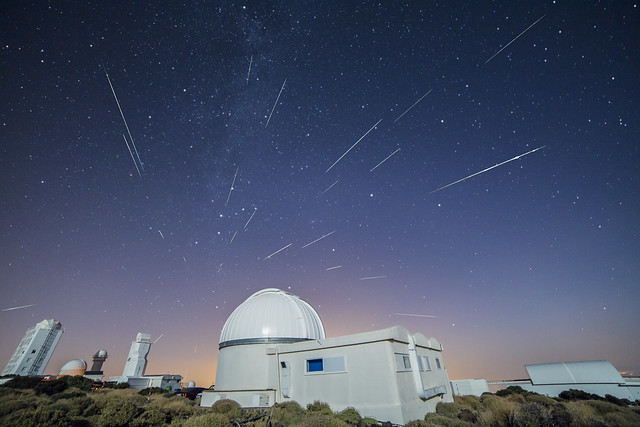
Perseids 2016 over the Teide Observatory. Combination of  25 meteors from the Perseids meteor shower detected in 24 frames. All frames were taken with a CANON EOS 5D Mark III with a Samyang 14mm lens, 30 seconds exposure at f/2.8 and ISO 800. Frames were taken between 0:00 and 2:30 UTC 12 August 2016 from the Teide Observatory (Tenerife, Canary Islands, Spain). The central dome is the Carlos Sánchez Telescope (TCS). The building at the right is the Quijote Experiment. The towers at the left belongs to the Solar Telescopes at site. The dome of the MONS Telescope is seen with some orange light.

The frame taken at 0:36 UTC was used for showing the landscape and the star field. The Moon was up, its light painted the landscape and buildings. In the background some light pollution from Santa Cruz de Tenerife and La Laguna can be seen (orange colours). The light pollution was enhanced because of the existence of dust in the atmosphere.

The estimated ZHR (Zenithal Hourly Rate) using these images is ZHR = 31 meteors/hour.

More info and high resolution images:

https://www.flickr.com/photos/angelrls/27722628870

Credit: Ángel R. López-Sánchez (AAO/MQU)