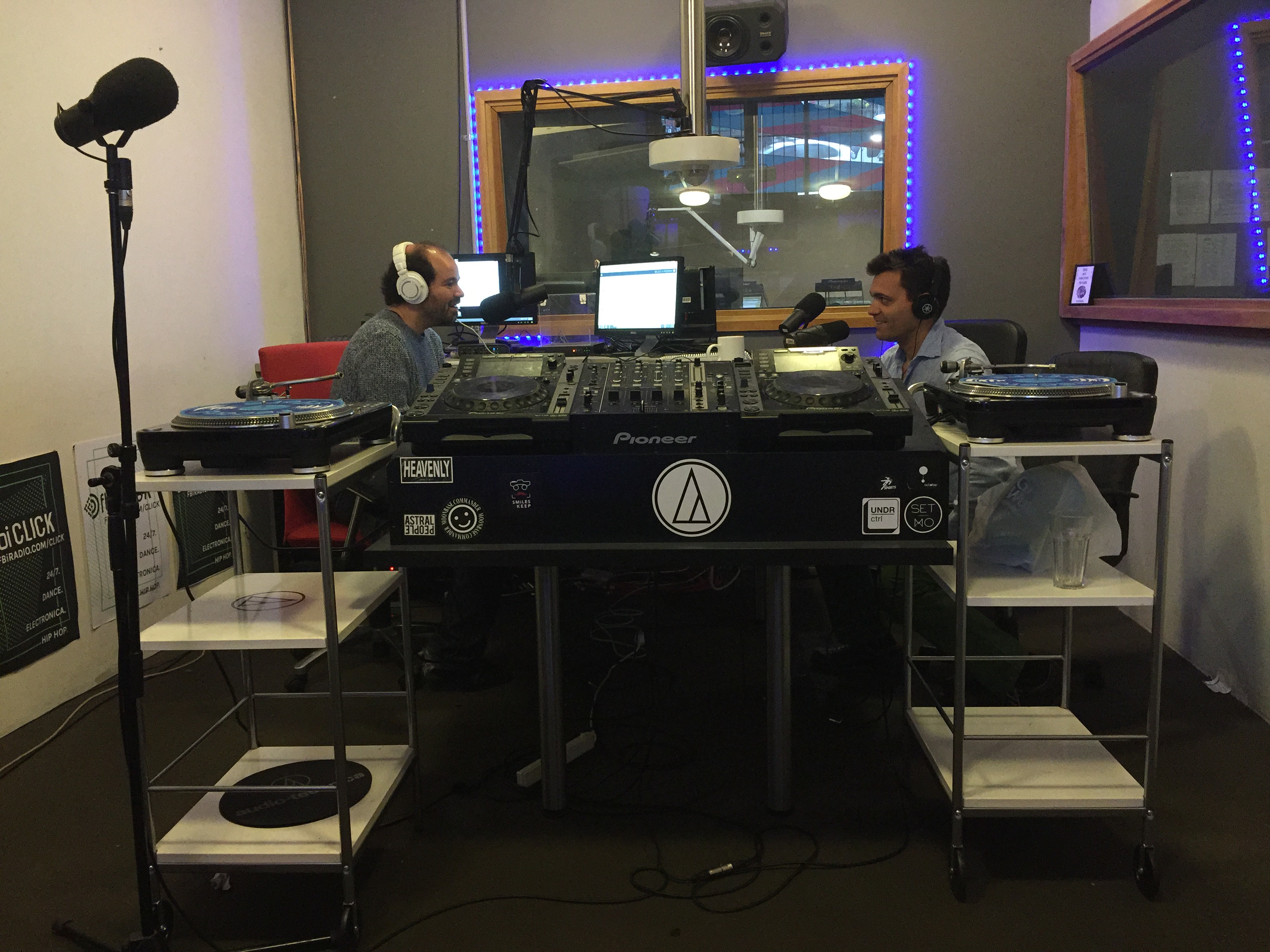
Some few months ago I was interviewed by Zacha Rosen in the FBi’s Not What You Think radio show. I was talking about what a galaxy is, the feeling of seeing the center of the Milky Way close to the zenith for the first time, and the problem of the light pollution.
The show was broadcasted on FBI 94.5 FM at 10:30am Saturday October 22nd, Sydney time. It is also available as podcast from the Not What You Think webpage or using iTunes.
You can also listen to the 18 minutes interview here:
Thanks Zacha for this wonderful experience I hope to repeat in the future!
After a very intense trip to Spain during July to September, I’m finally back to Australia, just in time to participate in the amazing StarFest 2016 in Coonabarabran, the “Astronomical Capital of Australia”, where Siding Spring Observatory is located.
First, on Friday 30th September we enjoyed the “Science in the Pub” event. I was part of the panel with Elisabete da Cunha (ANU), Fred Watson (AAO), Brad Moore (iTelescope) and David Malin (AAO). We talked about how astronomical images are taken and how to get the colours in Astronomy, with a lot of fun facts (thanks Fred!) about “what our eyes and brain try to see”.
“Science in the Pub” event in Coonabarabran (NSW, Australia) during StarFest 2016, Friday 30th September 2016. Participants are (from left to right): Ángel López-Sánchez (AAO/MQU), Elisabete da Cunha (ANU), Fred Watson (AAO), Brad Moore (iTelescope) and David Malin (AAO). High resolution version here. Photo credit: Steve Chapman (AAO).
Selfie Elisabete da Cunha and me took just moments before starting the “Science in the Pub” event in Coonabarabran (NSW, Australia) during StarFest 2016, Friday 30th September 2016. High resolution version here. Photo credit: Steve Chapman (AAO).
Me and the gift I received after the “Science in the Pub” event in Coonabarabran (NSW, Australia) during StarFest 2016, Friday 30th September 2016. High resolution version here. Photo credit: Steve Chapman (AAO).
On Saturday October 1st was the “Siding Spring Observatory Open Day”. Besides the bad weather, we had plenty of visitors of all ages, from kids to students to elders, all interested about Astronomy and Space. As usual I couldn’t stop talking to everyone, but I also took some photos. As I was jet-lagged (it was just 36 hours after I landed on Sydney) I was very early at the AAT and took some few photos with all ready to go!
The Anglo-Australian Telescope (AAT) is ready to start StarFest 2016!. Photo taken on Saturday 1 October 2016 during Siding Spring Observatory Open Day, part of StarFest 2016, in Coonabarabran (NSW, Australia). High resolution version here. Photo credit: Ángel R. López-Sánchez (AAO/MQ).
A lot of visitors at the Anglo-Australian Telescope during StarFest 2016 in Coonabarabran (NSW, Australia). Photo taken on Saturday 1 October 2016 during Siding Spring Observatory Open Day, part of StarFest 2016, in Coonabarabran (NSW, Australia). High resolution version here. Photo credit: Ángel R. López-Sánchez (AAO/MQ).
Doug Gray (AAO) explains how the AAT works to visitors of StarFest 2016. Photo taken on Saturday 1 October 2016 during Siding Spring Observatory Open Day, part of StarFest 2016, in Coonabarabran (NSW, Australia). High resolution version here. Photo credit: Ángel R. López-Sánchez (AAO/MQ).
A wonderful local orchestra was playing famous themes inside the AAT dome during the StarFest 2016. Photo taken on Saturday 1 October 2016 during Siding Spring Observatory Open Day, part of StarFest 2016, in Coonabarabran (NSW, Australia). High resolution version here. Photo credit: Ángel R. López-Sánchez (AAO/MQ).
However, it was particularly exciting to have a local orchestra playing in the dome! I don’t know who had the idea but was great, so I hope they do it again in the future. I couldn’t help myself and took this video of the orchestra playing two very famous themes: Star Wars and Indiana Jones.
A local orchestra plays the Star Wars & Indiana Jones themes inside the dome of the 3.9m Anglo-Australian Telescope (AAT) at Siding Spring Observatory near Coonabarabran (NSW, Australia) during StarFest 2016. Saturday 1 October 2016. Video credit: Ángel R. López-Sánchez (AAO/MQ).
I really enjoyed this day, and I’m looking forward participating again in StarFest 2017!
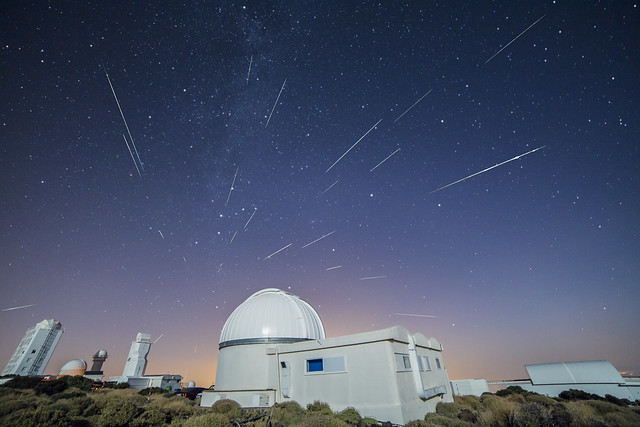
Perseids 2016 over the Teide Observatory. Combination of 25 meteors from the Perseids meteor shower detected in 24 frames. All frames were taken with a CANON EOS 5D Mark III with a Samyang 14mm lens, 30 seconds exposure at f/2.8 and ISO 800. Frames were taken between 0:00 and 2:30 UTC 12 August 2016 from the Teide Observatory (Tenerife, Canary Islands, Spain). The central dome is the Carlos Sánchez Telescope (TCS). The building at the right is the Quijote Experiment. The towers at the left belongs to the Solar Telescopes at site. The dome of the MONS Telescope is seen with some orange light.
The frame taken at 0:36 UTC was used for showing the landscape and the star field. The Moon was up, its light painted the landscape and buildings. In the background some light pollution from Santa Cruz de Tenerife and La Laguna can be seen (orange colours). The light pollution was enhanced because of the existence of dust in the atmosphere.
The estimated ZHR (Zenithal Hourly Rate) using these images is ZHR = 31 meteors/hour.
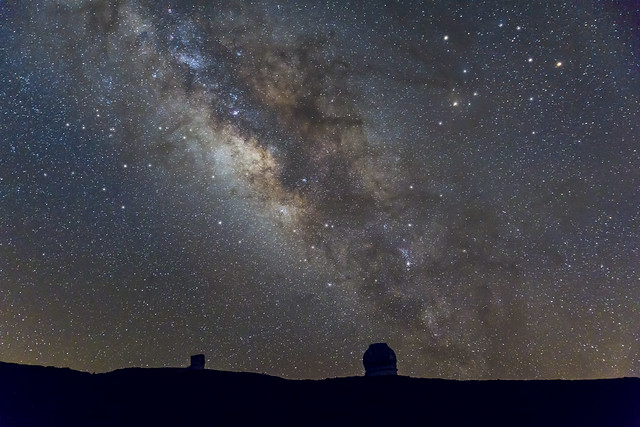
Milky Way over the 10.4m Gran Telescopio CANARIAS (GTC) and the 3.6m Telescopio Nazionale Galileo (TNG), Roque de los Muchachos Observatory, La Palma, Canary Islands, Spain.
Single frame, 15 seconds exposure at 1600 ISO over CANON EOS 5D Mark III, F=33mm and f/2.8. Taken on Wed 3 Aug 2016, 20:35 UTC.
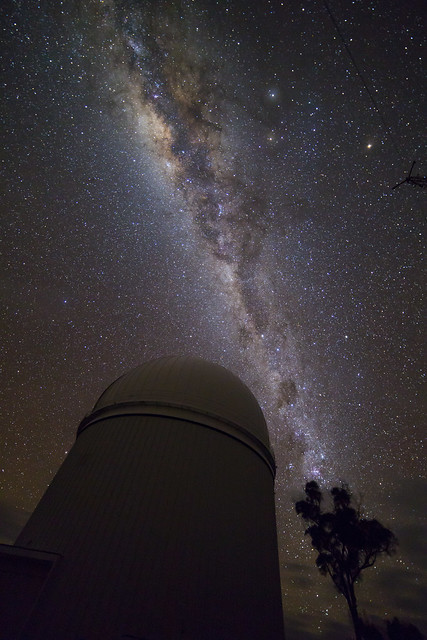
Vertical Milky Way over the Anglo-Australian Telescope. Image obtained on 30th June 2016 at 22:04 AEST (14:04 UTC) using a CANON 5D Mark III with a 14mm f2.8 wide lens. Single 30 seconds exposure at 3200 ISO. Besides the conversion from RAW to JPEG, no further image process was applied. The famous dark constellation “Emu in the Sky” seen by Australian Aboriginals, planets Mars and Saturn, bright star Antares in Scorpio, and nebulae such as Carina, Lagoon, and Trifid, are easily recognized in the image.








 A/Prof. Ángel R. López-Sánchez