
Today, 11th February, we’re celebrating the International Day of Women and Girls in Science. Introduced by the UN in December 2015, this is the second year it is done. This International Day recognizes the critical role women and girls play in science and technology communities, and aims to promote events that support and promote the access of women and girls and their participation in science, technology, engineering and mathematics education, training and research activities at all levels.
For this I really recommend the wonderful new book by famous science writer Dava Sobel: The Glass Universe. This book describes the challenges and achievements at Harvard College Observatory (U.S.A.), when in the mid-nineteenth century began employing women as calculators, or “human computers”, to interpret the observations their male counterparts made via telescope each night. Observations were taken with the new technique of photography.
In particular, they used glass photographic plates (in few decades they got almost half a million of them!) and, as “readers of books written in glass”, these women made extraordinary discoveries that definitively changed the way we understood the stars and the Universe. They helped discern what the stars were made of, divided them into meaningful categories for further research, and even found a way to measure distances across space by starlight. The lifes and works of all these women are truly inspiring.

Book “The Glass Universe” by Dava Sobel. Wonderful.
I’m still half way through the book, but I’ll update this post during the week providing extra information about what I’ve found most fascinating on it. Believe me I’m finding many discoveries reading “The Glass Universe“, starting with realizing how “reading the lines of the stars” (spectroscopy) was done in those times.
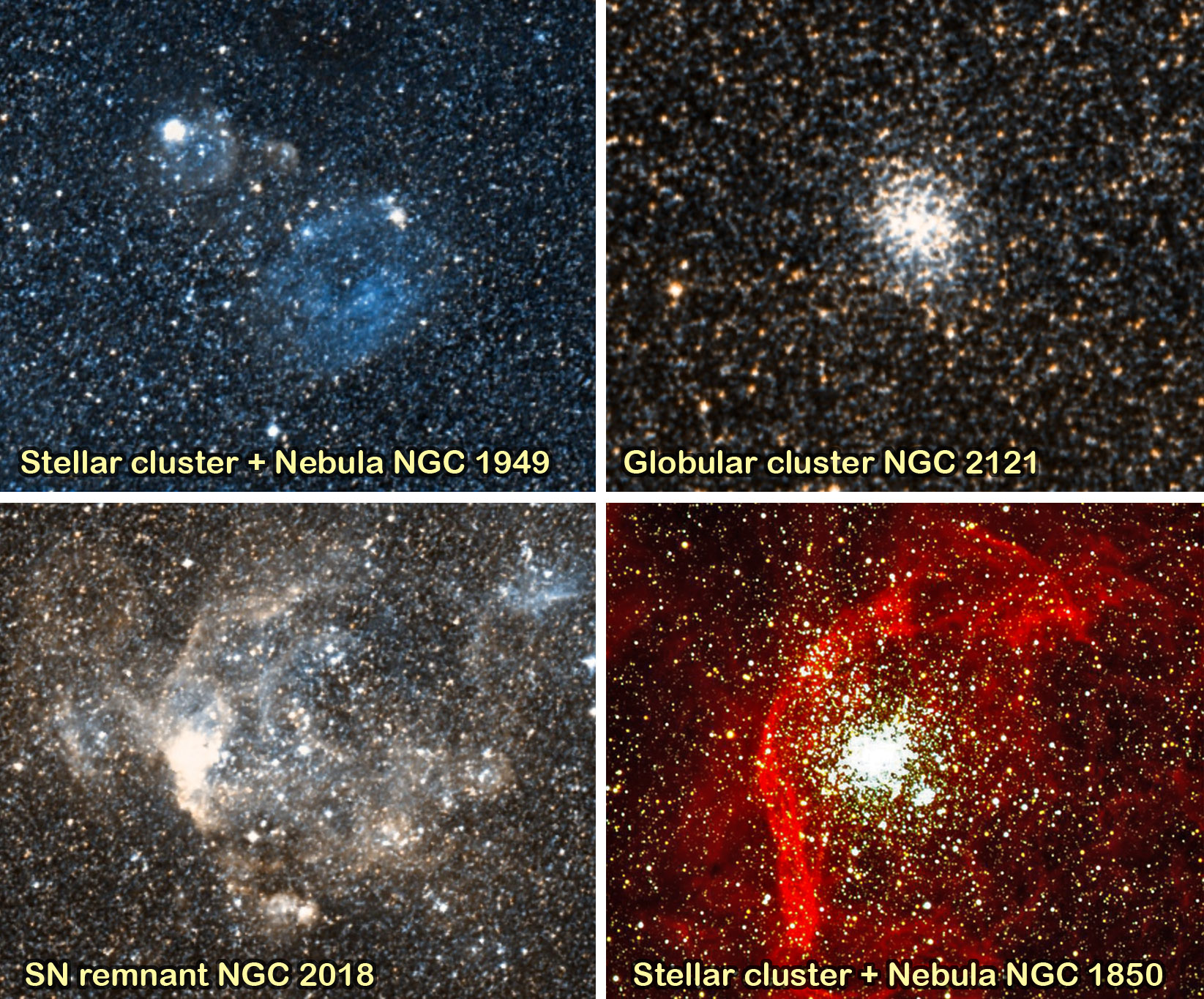
![NGC 2018 - Supernova remnant in the LMC Data taken on 24 November 2016 as part of the AAO Outreach Exercise “Large Magellanic Cloud Little Gems with CACTI”. CACTI camera in 2dF @ 3.9m Anglo-Australian Telescope. Color image using B (6 x 10s, blue) + [O III] (6 x 60 s, green) + Ha (8 x 60 s, red) filters. Credit: Ángel R. López-Sánchez (Australian Astronomical Observatory / Macquarie University) & Steve Lee, Robert Patterson & Robert Dean (AAO) Night assistant at the AAT: Steve Lee (AAO).](https://angelrls.com/wp-content/uploads/2016/11/ngc2018_bo3ha_lamina.jpg)





 A/Prof. Ángel R. López-Sánchez