
OK, I’m trying something different here today.
Instead of just providing the link to the Twitter thread, I’m compiling all the tweets I sent about my amateur astronomy session at Siding Spring Observatory last night, 1st March 2020, while finally testing my new equipment (mount and cameras) from a dark place.
The Twitter thread starts here.
Preparing my telescopes for playing tonight 😉

OK, good news: I did the polar alignment of the mount using 3 methods (@zwoasi ASIAir + guider / canon 5D, eye using polar scope of mount) and all agree!! I got an accuracy of 16” in total, which I think it is awesome!

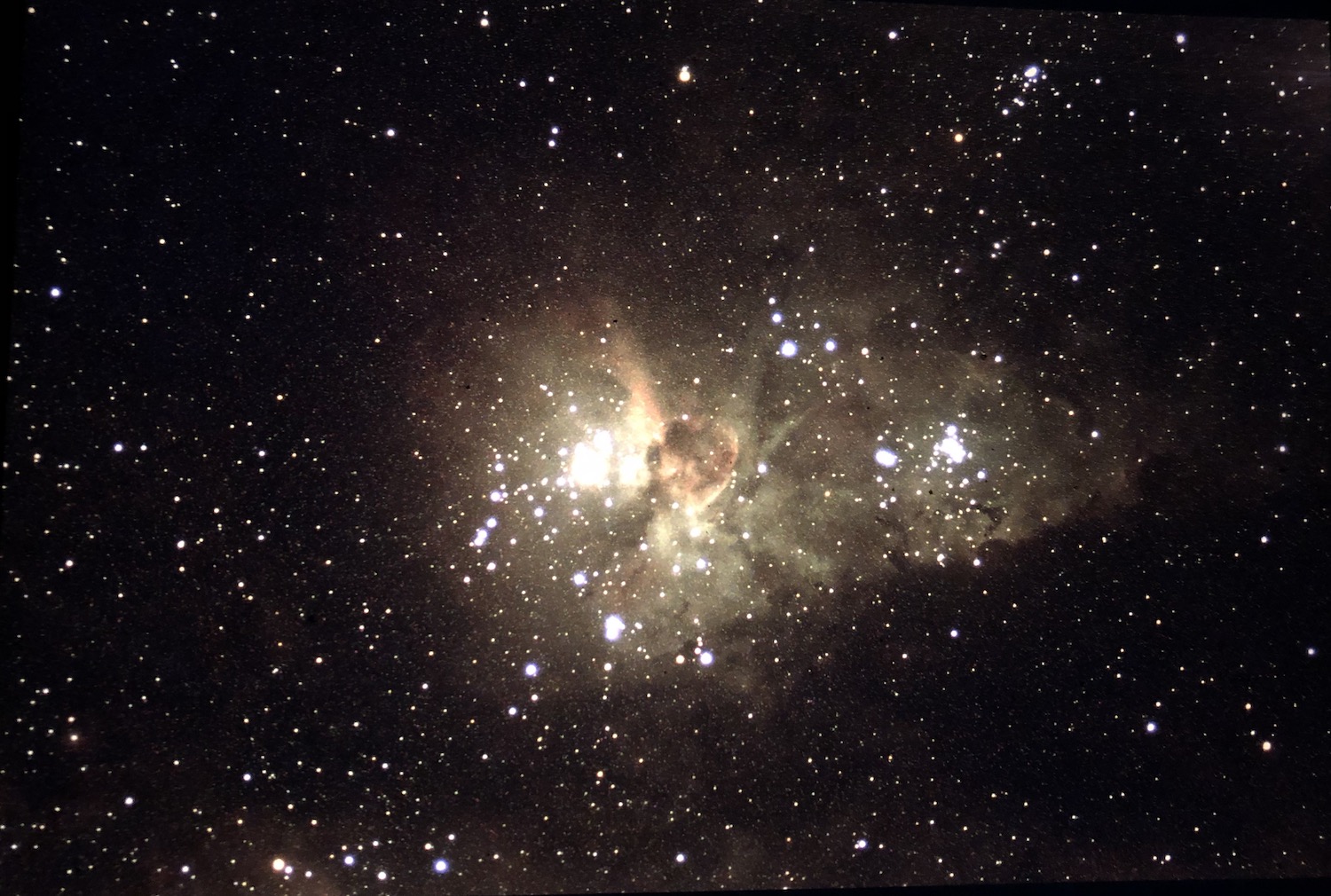
Yep, this is now working! It took me an extra while to get the calibration of the auto-guiding good, but now errors are within 0.4-0.6”, which is great… so observing again Carina Neb. 3 min, Skywatcher BD80+ZWO 178MC, single 3 min exposure, no filter, from Siding Spring Observatory.
So here I am, in the bed at my room at the ANU Lodge at Siding Spring Observatory, controlling my amateur telescope at 50m using my son’s iPad… I’m sleepy so I’ll probably let it running and get some sleep

zzz moved it to M83 and it works… 5 minute exposures, now applying a small dithering between exposures…. launched 40 and continue zzzz

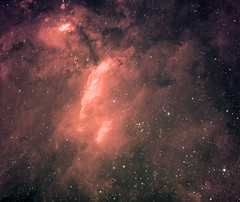
Results! Carina Nebula, 52 x 3 min exposures, almost perfect guiding, processed with Siril, color/stretch with Photoshop, using Skywatcher BD80 & @zwoasi 178MC. No light pollution filter, from Siding Spring Observatory last night, 1st March 2020. Only 2 darks & no dithering.
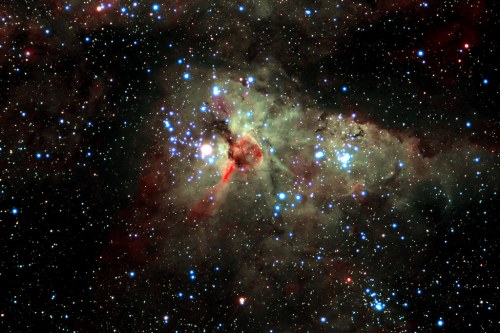
The center of the Carina Nebula with massive star Eta Carina.
Full resolution in my Flickr.
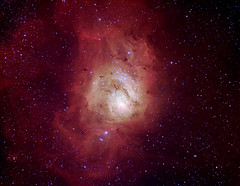
Please, do compare it with the image of the same nebula I took from Sydney, 60 x 60s exposures, fair guiding, @Optolong_filter light pollution filter last Thursday night (basically same processing).

Carina Nebula, 27 Feb 2020 from my backyard in Frenchs Forest, 15 km N from Sydney’s city center. Skywatcher Black Diamond & ZWO ASI178MC. 60 frames x 60s each, aligned & stacked with Siril software, color + extra processing with Photoshop. No darks, no flats, but the Optolong UHC light pollution filter was used.
Full resolution in my Flickr.
Something else learned with this (although later I remembered I read about it before): if the tracking+guiding is excellent you HAVE TO DITHER the field between frames. Otherwise you’ll get these low-intensity stripes that are impossible to remove…
Luckily, I DID dither for M83: 40×5 min exposures, almost perfect guiding, processed with Siril, color/stretch with Photoshop, using Skywatcher BD80 & @zwoasi 178MC. No light pollution filter, from Siding Spring Observatory last night, 1st March 2020. Only 2 darks used!
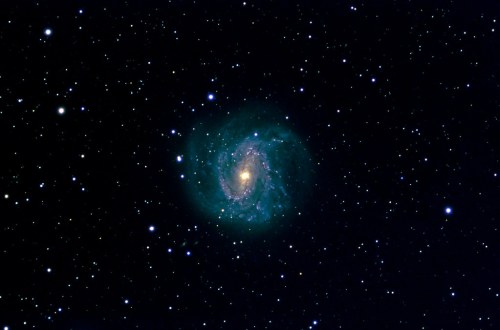
Spiral galaxy M83. Full resolution in my Flickr.





 A/Prof. Ángel R. López-Sánchez