Monthly Archives: April 2017

Successful BBC and ABC Stargazing Live TV events at Siding Spring Observatory

Article originally written by Ángel R. López-Sánchez for the “AAO Observer” 132, August 2017. Credits of all the photos: Ángel R. López-Sánchez.

Colorful lights in dome of our Anglo-Australian Telescope in preparation for the Stargazing Live TV shows.
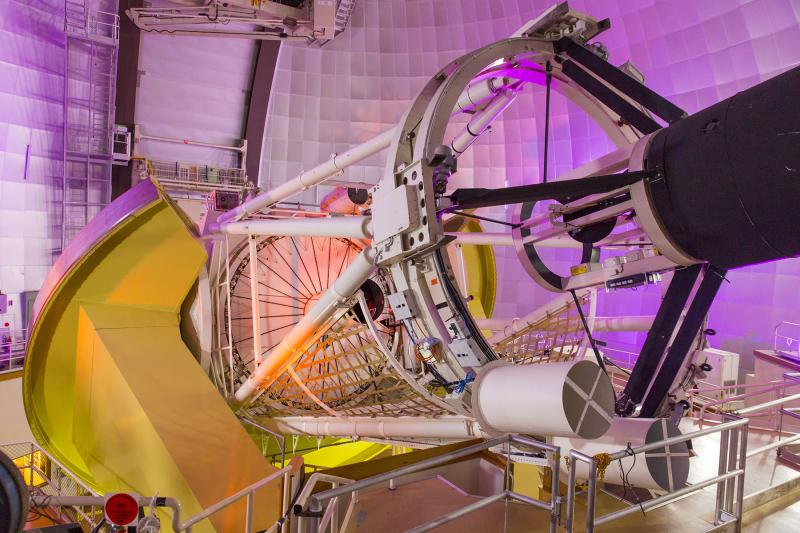
During two weeks in late March and early April 2017, famous physicist and TV presenter Professor Brian Cox co-hosted two “Stargazing TV” shows emitted live from Siding Spring Observatory in the BBC and in the ABC. The stage of these major TV events was our Anglo-Australian Telescope, (AAT) at Siding Spring Observatory, on the edge of the Warrumbungle National Park near Coonabarabran, NSW.

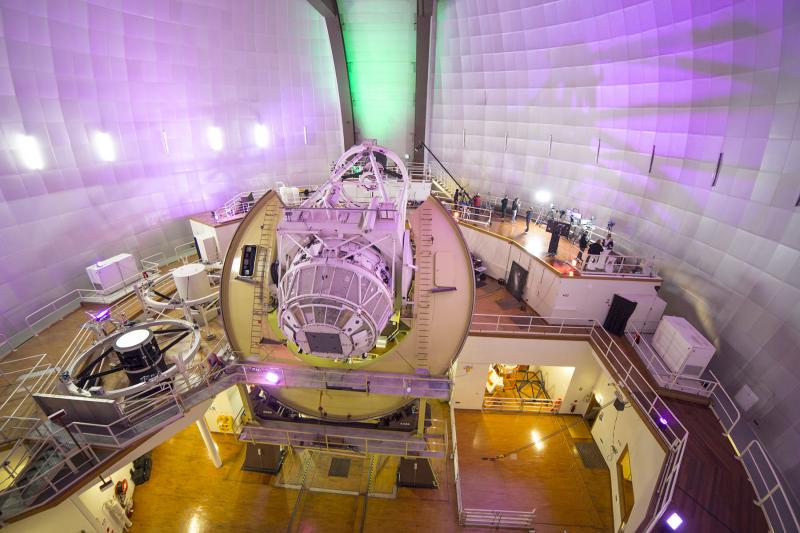
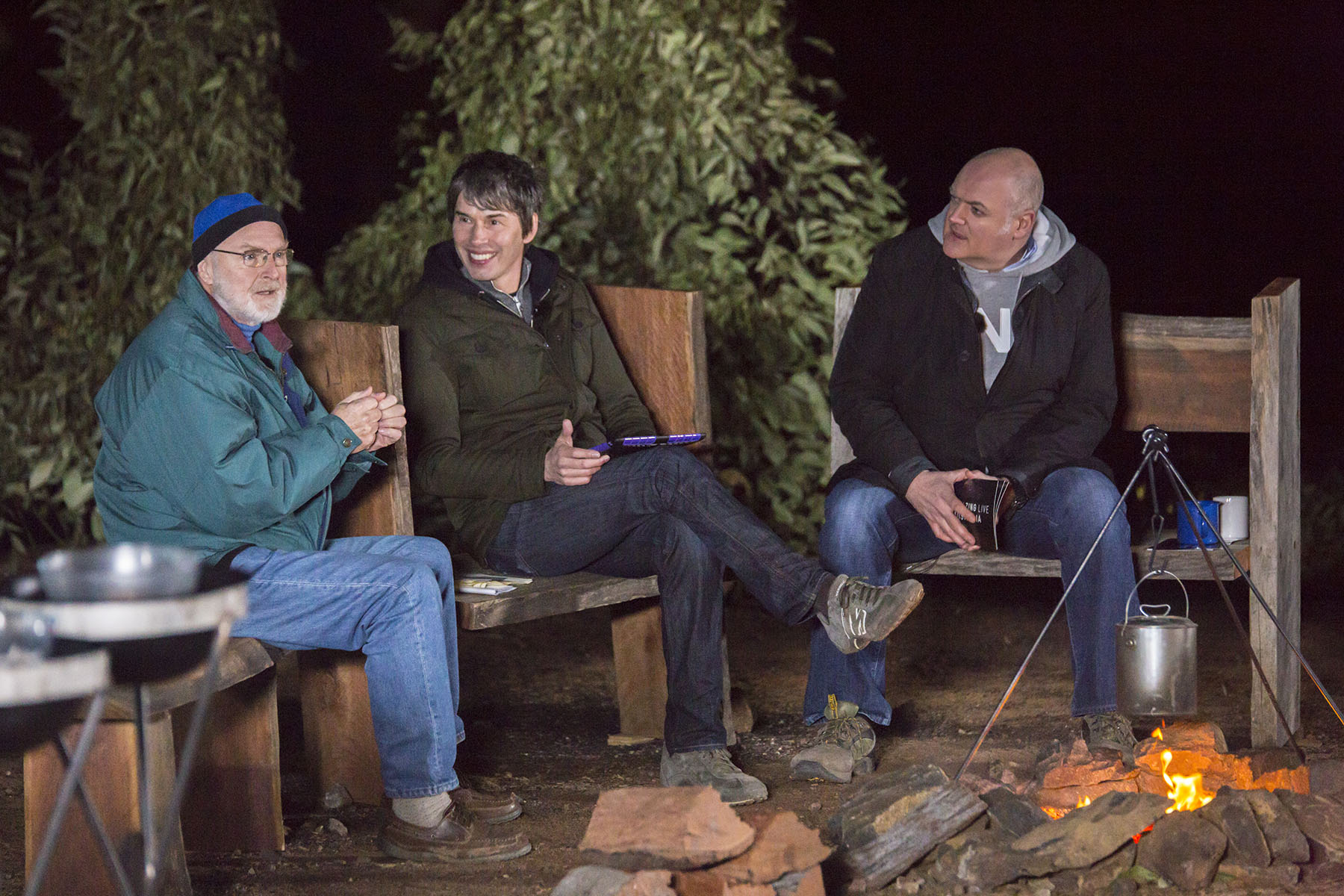
BBC Stargazing Live shows at Siding Spring Observatory were emitted on the early morning of Wednesday 29th, Thursday 30th and Friday 31st March 2017 (evenings of the previous days in the UK). BBC Stargazing Live TV shows were hosted by Professor Brian Cox and TV presenter and comedian Dara Ó Briain, with the participation of biologist and BBC presenter Liz Bonnin and Broome-based amateur astronomer Greg Quicke (who was very popular in social media, receiving the nickname of #SpaceGandalf).
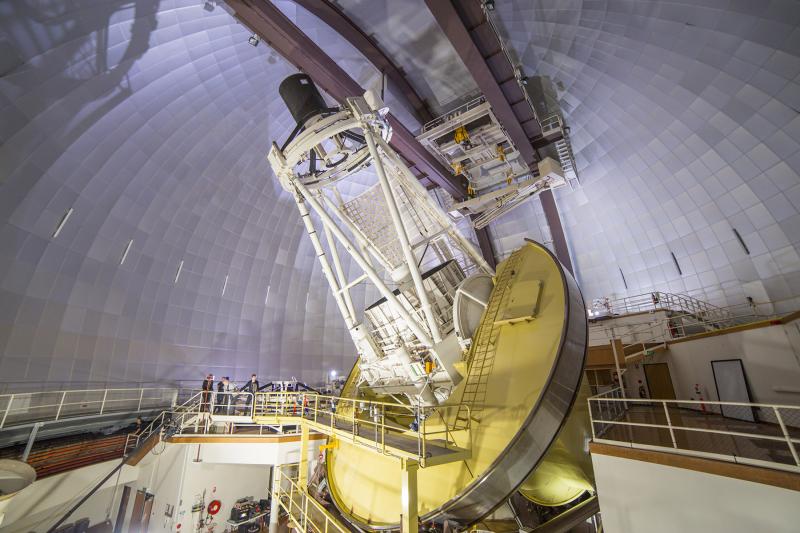
During BBC Stargazing Live astrophysicist and science communicator Lisa Harvey-Smith (CSIRO) was also interviewed. Astronomer and journalist Chris Lintott (Oxford University) was in charge of reporting the news of the citizen science project “The Search for Planet 9“, led by astronomers at the Australian National University and launched in the first episode of BBC Stargazing Live. This citizen science project uses images taken with the Skymapper telescope at Siding Spring Observatory to search for a new planet in our Solar System.

#StargazingABC live episodes were emitted the following week (Tuesday 4th, Wednesday 5th and Thursday 6th April 2017). Hosts Professor Brian Cox and TV presenter Julia Zemiro were joined by astronomers to inspire Australia to explore our Universe and tackle astronomy’s most intriguing questions. Astronomer Lisa Harvey-Smith (CSIRO) also participated as TV presenter for the #StargazingABC shows.

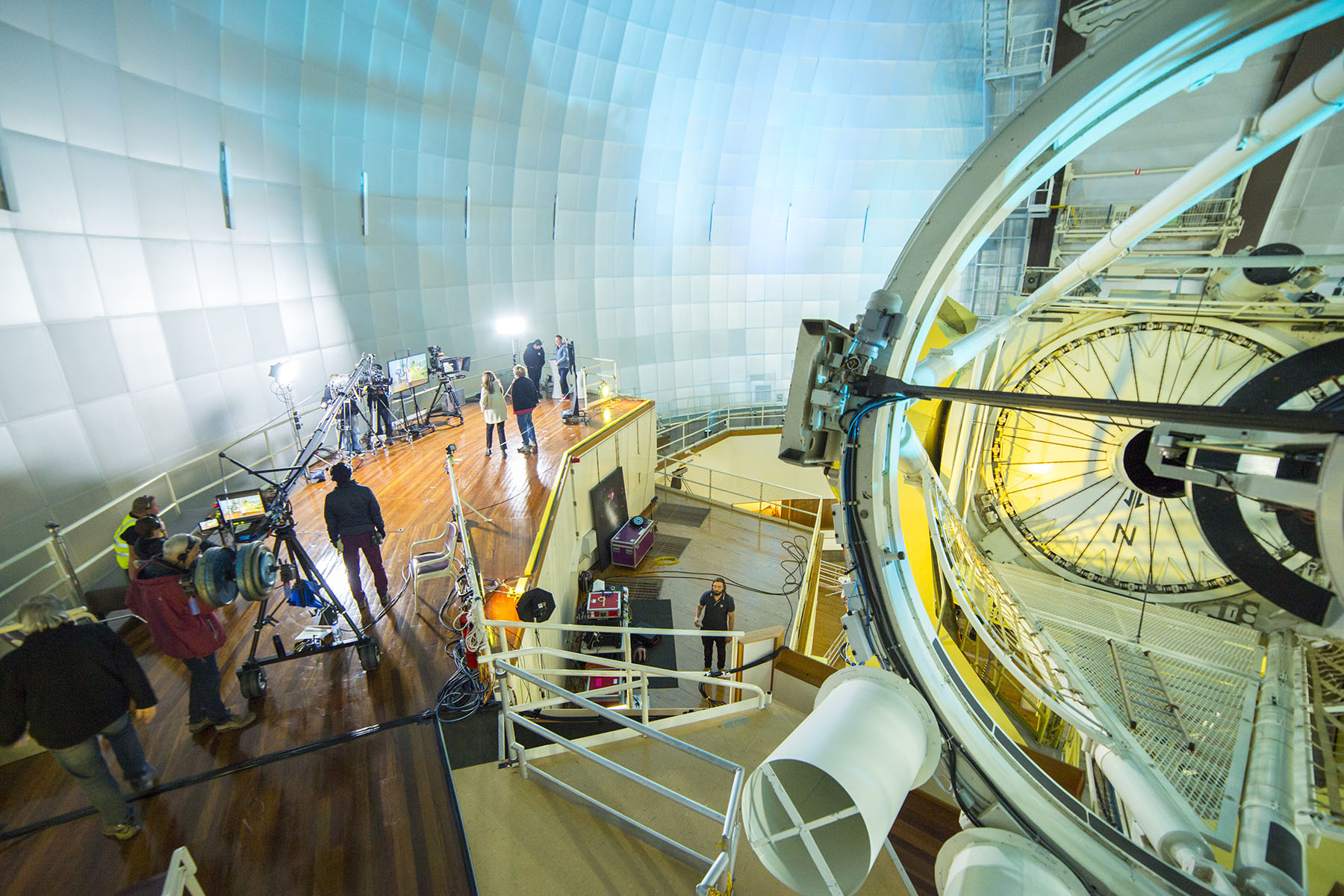
AAO’s Fred Watson, Steve Lee and David Malin were interviewed several times during the ABC and BBC Stargazing Live shows.

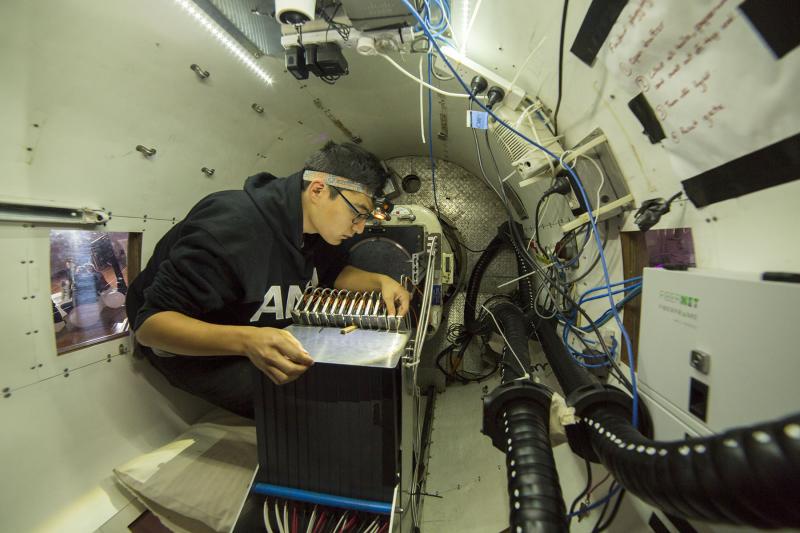
SAMI observers at the Anglo-Australian Telescope shared the dome with ABC crew while preparing instrument and telescope for observations on the afternoon of Sunday 2nd April.

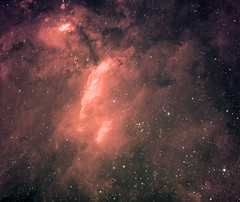
For #StargazingABC first episode, the Milky Way, AAO astronomers Ángel López-Sánchez and Steve Lee prepared a new astronomical color image using data taken with the CACTI auxiliary camera of the AAT, which was broadcasted in the episode. This image shows Diffuse gas and dust in the heart of the Carina Nebula. The bright star is Eta Carinae, a massive double star at the end of its live that will soon explode as a supernova. The “Keyhole” is the dark cloud in the centre of the image.

Both Stargazing Live ABC events were very successful. #StargazingABC live episodes reached 2.7 million viewers across metro and regional Australia. They also had a huge impact in social media. ABC 1st TV episode reached over 240K people and had more than 8K reactions in Facebook, comments and shares, similar numbers to those obtained with ABC TV’s New Year’s Eve Family Fireworks stream. Regarding Twitter, the #StargazingABC hashtag reached 18.4 million users and produced 16.8K tweets from 6.3K unique contributors. 12.8K of these tweets were produced during the broadcasts, making #StargazingABC trend no.1 in Australia.

Credits of all the photos: Ángel R. López-Sánchez.

More information: AAO news: ABC Stargazing Live at the AAT.

Timelapse: A SAMI night at the AAT

See below the new Media Release published by the AAO. This new timelapse video has been also used for StargazingBBC and StargazingABC on March and April 2017.

This new astronomical time-lapse video features the unique SAMI (Sydney-AAO Multi-object Integral-field unit) instrument at the Anglo-Australian Telescope and the beauty of the dark sky over Siding Spring Observatory.

One of the most powerful instruments at the Anglo-Australian Telescope (Siding Spring Observatory, NSW) is the Sydney-AAO Multi-object Integral-field unit (SAMI). SAMI provides 13 fibred based IFUs called “hexabundles” that can “dissect” astronomical objects using spectroscopy. This instrument is used by the SAMI Galaxy Survey, that aims to “dissect” 3000 galaxies in different environments to help astronomers understand galaxy evolution and the tight relationship between gas and stars in galaxies.

However, unlike what the 2dF robot does, SAMI hexabundles must be plugged and unplugged manually very carefully by an expert user.

This video tells the story of a typical observing night with SAMI at the Anglo-Australian Telescope. In the first part, observers carefully prepare the SAMI instrument unplugging the plate they observed the previous night and plugging a complete new plate to be observed that night. SAMI observers usually need half an hour to complete this task, but in this timelapse video it is done in just a minute. Later they move to the AAT Control Room and start observations just as the sun sets. The twilight moves to a moonless, dark night, when only the stars shine over the Anglo-Australian Telescope, providing an spectacular view of the night sky from the Southern Hemisphere, and clear skies for the SAMI Galaxy Survey team to dissect distant galaxies.

In this timelapse you will see the Milky Way rising and setting, the Southern Cross with the Coalsack, the globular cluster 47 Tucanae near the Small Magellanic Cloud, the Large Magellanic Cloud with its strong star-forming region the Tarantula Nebula (30 Doradus), star clusters like the Pleiades moving behind the AAT, Orion rising and setting, the Carina Nebula rising, the magestic Emu in the Sky, and circumpolar stars (with the International Space Station) turning above the dome of the Anglo-Australian Telescope.

All the sequences have been filmed and processed in high resolution (4K) by astronomer Ángel R. López-Sánchez (Australian Astronomical Observatory / Macquarie University) while observing at the AAT for the SAMI Galaxy Survey, between September 2015 and March 2017. He used a CANON 5D Mark III with different lenses, all at f2.8. The night sequences tipically have 24 frames per second, each frame lasting 30 seconds in real time. Therefore 1 second of the night sequences corresponds to 12 minutes in real time.

To enjoy this video, watch it in full screen and at least in Full-HD (4K resolution recommended), in a dark room. As in real live, the details in the sky appear when we are far from the light pollution.

Credits of the video: Ángel R. López-Sánchez (Australian Astronomical Observatory / Macquarie University)
Featuring: Luca Cortese (ICRAR-UWA), Jesse van de Sande (University of Sydney) and Steve Chapman (Night Assistant at the AAT)
SAMI plugger: Ángel R. López-Sánchez (AAO/MQU)
Music: It’s personal (World in flames, 2011), Celestial Aeon Project.

Image

Eta Carinae and the Keyhole Nebula

Eta Carinae and the Keyhole Nebula

Diffuse gas and dust in the heart of the Carina Nebula. The bright star is Eta Carinae, a massive double star at the end of its live that will soon explode as a supernova. The “Keyhole” is the dark cloud in the centre of the image.

Image obtained as part of the “ABC Stargazing Live” events at Siding Spring Observatory (NSW, Australia), 4 – 6 April 2017.

Data taken on 3rd April 2017 using the CACTI camera in 2dF at the 3.9m Anglo-Australian Telescope. Color image using B (12 x 60s, blue) + [O III] (12 x 60 s, green) + Hα (12 x 60 s, red) filters.

More sizes and high-resolution image in my Flickr.

Credit: Ángel R. López-Sánchez (Australian Astronomical Observatory and Macquarie University), Steve Lee, Robert Patterson & Robert Dean (AAO), Night assistant at the AAT: Wiston Campbell (AAO).