Tag Archives: AAT

The first detection of an electromagnetic counterpart to a gravitational wave event

Full AAO Media Release, published at 01:00am Sydney time, 17 October 2017, that I coordinated.

For the first time, astronomers have observed the afterglow of an event that was also detected in gravitational waves. The object, dubbed AT2017gfo, was a pair of in-spiralling neutron stars in a galaxy 130 million light years away. The death spiral was detected in gravitational waves, and the resulting explosion was followed by over 50 observatories world wide, including the AAO and other observatories here in Australia.

On August 17, the Advanced Laser Interferometer Gravitational-Wave Observatory (LIGO), based in the United States, detected a new gravitational wave event, called GW170817.

GW170817 is the fifth source of gravitational waves ever recorded. The first one was discovered in September 2015, for which three founding members of the LIGO collaboration were awarded the 2017 Nobel Prize in Physics.

The GW170817 data are consistent with the merging of two neutron stars and are unlike the four previous events, which were merging black holes.

Artist’s illustration of two merging neutron stars. The narrow beams represent the gamma-ray burst while the rippling space-time grid indicates the gravitational waves that characterize the merger. Swirling clouds of material ejected from the merging stars are a possible source of the light that was seen at lower energies. Credit: National Science Foundation/LIGO/Sonoma State University/A. Simonnet.

The Advanced-Virgo interferometer, based in Italy, was online at the time of the discovery and contributed to the localization of the new gravitational wave burst.

Based on information from LIGO and VIRGO, numerous telescopes immediately sprang into action to determine if an electromagnetic counterpart to the gravitational waves could be detected.

Meanwhile, NASA’s Fermi satellite independently reported a short burst of gamma-rays within 2 seconds of the merger event associated with GW170817, consistent with the area of sky from which LIGO and VIRGO detected their gravitational waves.

This gamma-ray detection at the same time and place triggered even greater interest from the astronomical community and resulted in more intense follow up observations in optical, infrared and radio wavelengths.

A team of scientists within the Dark Energy Survey (DES) collaboration, which includes researchers from the Australian Astronomical Observatory and other Australian institutions, working with astronomers at the Harvard-Smithsonian Center for Astrophysics (CfA) in the U.S., were among the first astronomers to observe the electromagnetic counterpart of GW170817 in optical wavelengths.

Using the 570-megapixel Dark Energy Camera (DECam) mounted at the 4m Blanco Telescope at Cerro Tololo Inter-American Observatory in Chile, DES identified the kilonova AT2017gfo in the nearby galaxy NGC 4993, located only 130 million light years from us, as the optical counterpart of GW170817.
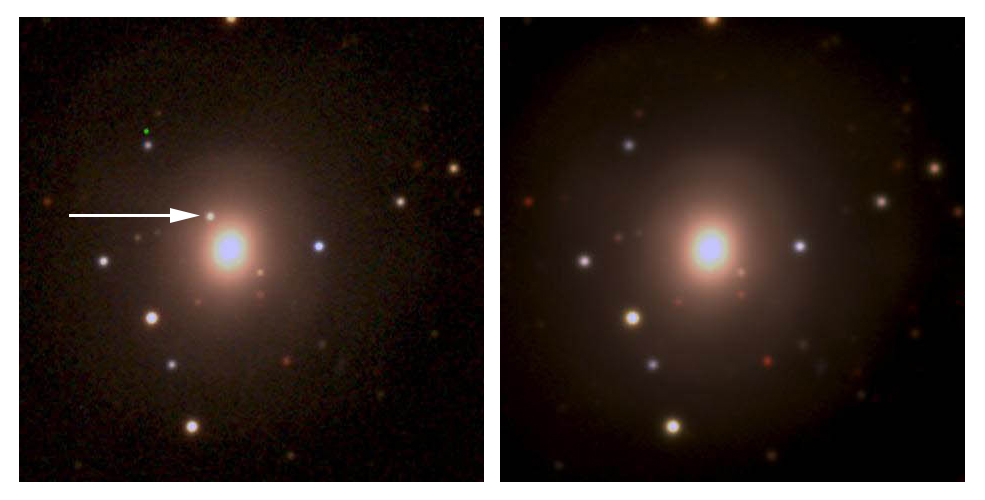
Composite of detection images, including the discovery z image taken on August 18th and the g and r images taken 1 day later. Right: The same area two weeks later. Credit: Soares-Santos et al. and DES Collaboration.

“Because of its large field of view, the Dark Energy Camera was able to search almost the entire region where LIGO/VIRGO expected the gravitational wave source to be, and its exquisite sensitivity allowed us to make detailed measurements of the kilonova – the extremely energetic outburst created by the merging neutron stars,” AAO Instrument Scientist and DES Collaboration member Dr Kyler Kuehn stated.

A kilonova is similar to a supernova in some aspects, but it is different in others. It occurs when two neutron stars crash into each other. These events are thought to be the mechanism by which many of the elements heavier than iron, such as gold, are formed.

“But as impressive as it is, the Dark Energy Camera is only one of many instruments with a front row seat to this celestial spectacle. A lot of effort has gone into preparing dozens of telescopes around the world to search for electromagnetic counterparts to gravitational waves”, Dr Kuehn added.

Simultaneously to the DES study, a large group of Australian astronomers obtained follow up observations of the kilonova AT2017gfo at optical, infrared and radio wavelengths, using 14 Australian telescopes as part of the ARC Centre of Excellence for Gravitational Wave Discovery (OzGrav) and other Australian programs.

Their data are consistent with the expected outburst and subsequent merger of two neutron stars, in agreement with the results derived for GW170817 by the LIGO/Virgo collaboration.

“Before this event, it was like we were sitting in an IMAX theatre with blindfolds on. The gravitational wave detectors let us ‘hear’ the movies of black hole collisions, but we couldn’t see anything. This event lifted the blindfolds and, wow, what an amazing show!!”, A/Professor Jeff Cooke, astronomer at Swinburne University who led many of the observations said.

The Australia team also conducted observations at the 3.9m Anglo-Australian Telescope (AAT), that is managed by the Australian Astronomical Observatory (AAO). Additional archive data from the 6dF survey obtained at the AAO’s 1.2m UK Schmidt Telescope were also used.

“The observations undertaken at the AAT place important constraints on the nature of the environment in which the kilonova occurred”, AAO astronomer Dr Chris Lidman said.

The follow up observations were not scheduled, but the excitement that this event generated in the astronomical community was so large that regular programs were placed on hold.

“Many astronomers dropped any other planned observation and used all the available resources to study this rare event”, said PhD candidate Igor Andreoni (Swinburne University and Australian Astronomical Observatory), first author of the scientific paper that will be published in the science journal “Publications of the Astronomical Society of Australia” (PASA).

The study also reveals that the host galaxy has not experienced significant star-formation during the last billion years. However, there is some evidence that indicates that NGC 4993 experienced a collision with a smaller galaxy not long time ago.

The position of the kilonova AT2017gfo, found in the external parts of NGC 4993, may suggest that the binary neutron star could have been part of the smaller galaxy.

Australian astronomers were thrilled to contribute to both the detection and the ongoing observations of the kilonova AT2017gfo, the electromagnetic counterpart to the gravitational wave event GW170817.

“We have been waiting and preparing for an event like this, but didn’t think it would happen so soon and in a galaxy that is so near to us. Once we were alerted of the gravitational wave detection, we immediately contacted a dozen telescopes and joined the worldwide effort to study this historic event. It didn’t let us down!”, A/Professor Jeff Cooke said.

“It was crucial to have telescopes placed in every continent, including Australia, to keep this rare event continuously monitored”, PhD candidate Igor Andreoni said.

“To me, this gravitational + electromagnetic wave combined detection is even more important than the initial detection that resulted in the Nobel Prize. This has changed the way the entire astronomical community operates”, AAO Instrument Scientist Dr Kyler Kuehn stated.

The first identification of the electromagnetic counterpart to a gravitational wave event is a milestone in the history of modern Astronomy, and opens a new era of multi-messenger astronomy.

More information:

AAO Media Release

AAO Media Release in Spanish / Nota de prensa del AAO en español

LIGO Media Release

DES Media Release

OzGrav Media Release

ESO Media Release

NASA Media Release

Article in The Conversation: “After the alert: radio ‘eyes’ hunt the source of the gravitational waves”, by Tara Murphy and David Kaplan

Article in The Conversation: “At last, we’ve found gravitational waves from a collapsing pair of neutron stars”, by David Blair

Multimedia, videos and animations:

Although there are many videos around there talking about this huge announcement, I particularly like this one by Derek Muller (Veritasium):

“The Story of Light: Surveying the Cosmos”, in Vivid Sydney Ideas 2017

Article originally written by Ángel R. López-Sánchez for the “AAO Observer” 132, August 2017.

Following the success of our sold-out Event “The Story of Light – The Astronomer’s Perspective” for ViVID Sydney Ideas 2015, and “The Story of Light – Deciphering the data encoded on the cosmic light” (see photos and the video of this event), the Australian Astronomical Observatory (AAO) continued its collaboration with ViVID Sydney 2017 organizing “The Story of Light – Surveying the Cosmos”.

This successful science communication event was held at the Powerhouse Museum (Sydney) on Sunday 4th June 2017. Having an audience of 300 people, it was sold out more than two weeks before the event.

“The Story of Light – Surveying the Cosmos” was connected to the 2017 Southern Cross Astrophysics Conference: Surveying the Cosmos, the Science from massively multiplexed surveys, that was held in Luna Park, Sydney, between 5th and 9th June 2017.

Poster for the AAO’s “The Story of Light – Surveying the Cosmos” Science Communication event for Vivid Sydney Ideas 2017. Credit: Angel R. Lopez-Sanchez.

In this event, five professional astrophysicists discussed how astronomers map the Cosmos using the big data collected with optical and radio telescopes by large astronomical surveys.

How do astronomers explore the Universe? Astrophysicists use extremely sensitive telescopes and instruments to collect the light emitted by stars, gas and galaxies. The analysis of this data provides the information needed to unlock the mysteries of the Cosmos.

However, this is not an easy task. Over the last two decades large international collaborations have been formed with the aim to map the skies, catalogue celestial objects, extract their properties and perform statistical analyses. These large astronomical surveys are now providing major advances in our understanding of the Cosmos at all scales, from searching for planets around other stars to detecting gravitational waves.

Australia is at the forefront of these collaborations thanks to the unique instruments at the Anglo-Australian Telescope (AAT) and the development of radio-interferometers as the Australian SKA Pathfinder (ASKAP).

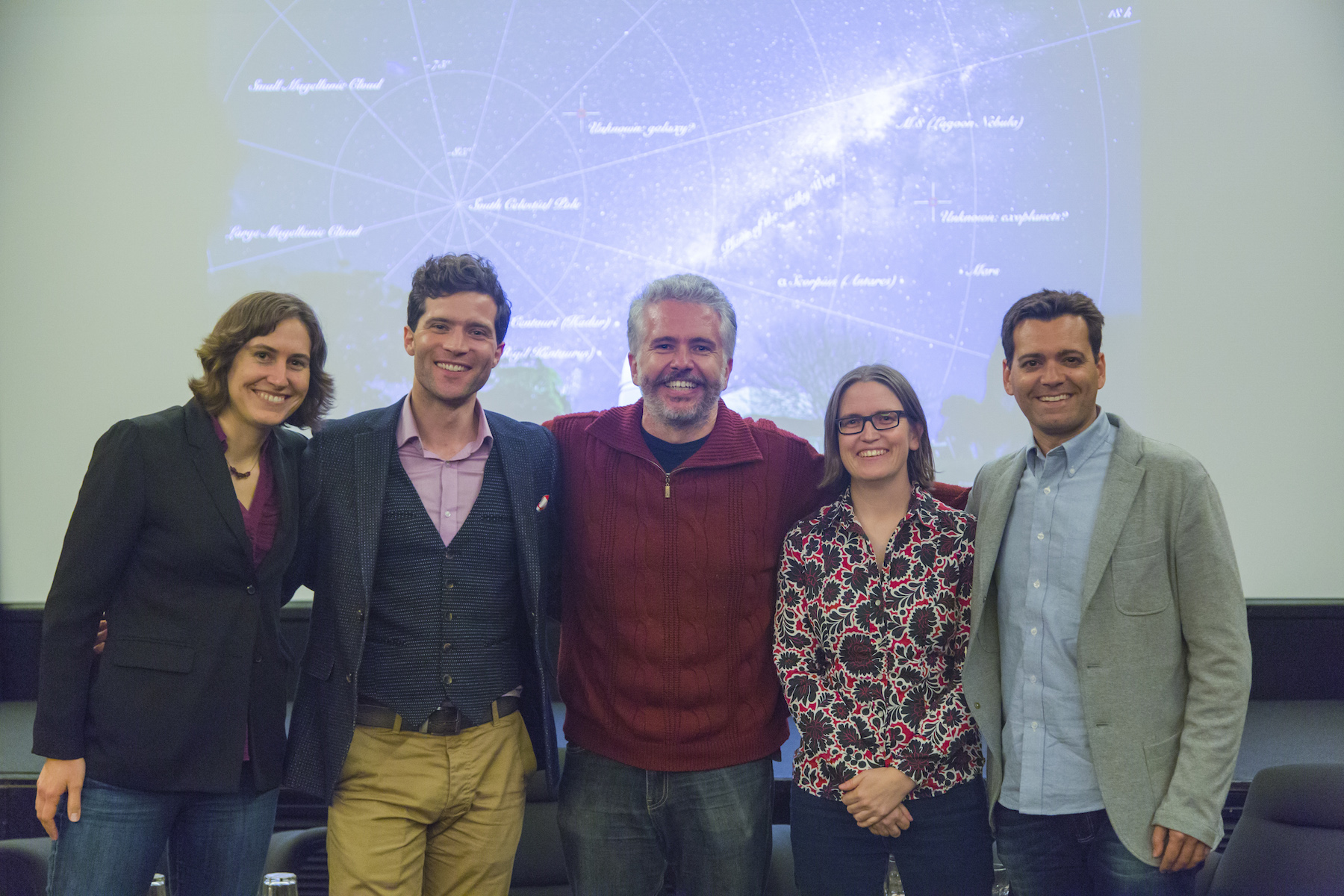
Panel members and MC of AAO’s “The Story of Light – Surveying the Cosmos” Science Communication event for Vivid Sydney Ideas 2017. From left to right: Katie Mack, Alan Duffy, Simon O’Toole, Tara Murphy and Ángel López-Sánchez. Credit: Duncan Wright (AAO/UNSW).

The panel members were Dr. Simon O’Toole (Australian Astronomical Observatory), who talked about surveying stars and exoplanets, Dr. Ángel R. López-Sánchez (Australian Astronomical Observatory / Macquarie University), who discussed how we surveying the galaxies, A/Prof. Tara Murphy (University of Sydney / CAASTRO), who invited us to surveying the invisible Universe, and Dr. Katie Mack (University of Melbourne), who talked about surveying the deep Universe. The event was hosted by famous astrophysicist and science communicator A/Prof. Alan R. Duffy (Swinburne University).

After short (15 minutes) talks, the panel answered questions about the Universe and challenging Physics questions as the nature of the dark matter and the dark energy. They also received some more philosophical questions that engaged the audience.

More information:

Successful BBC and ABC Stargazing Live TV events at Siding Spring Observatory

Article originally written by Ángel R. López-Sánchez for the “AAO Observer” 132, August 2017. Credits of all the photos: Ángel R. López-Sánchez.

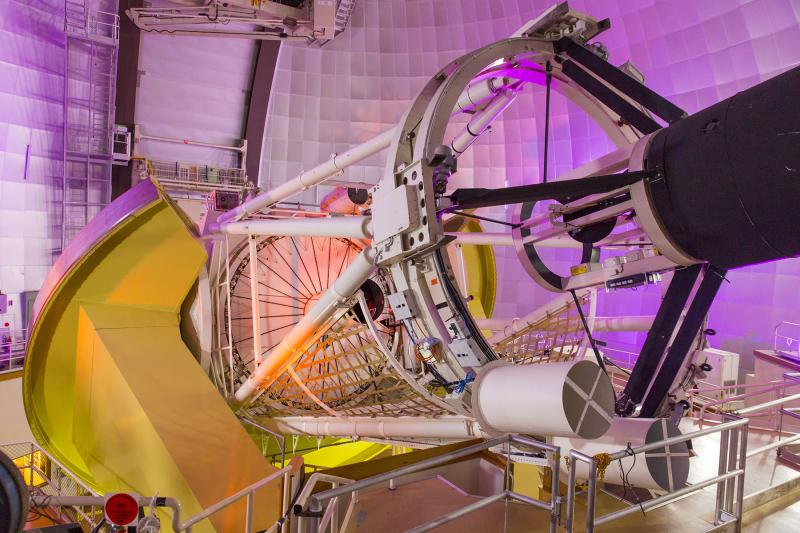
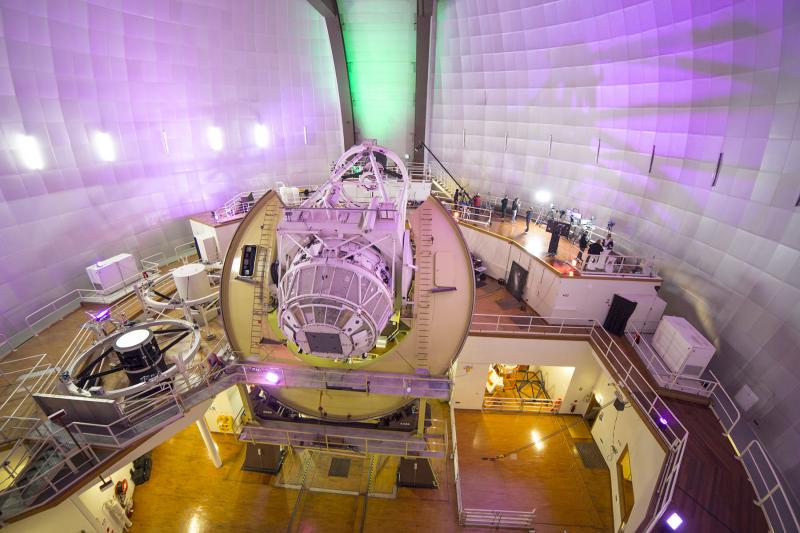
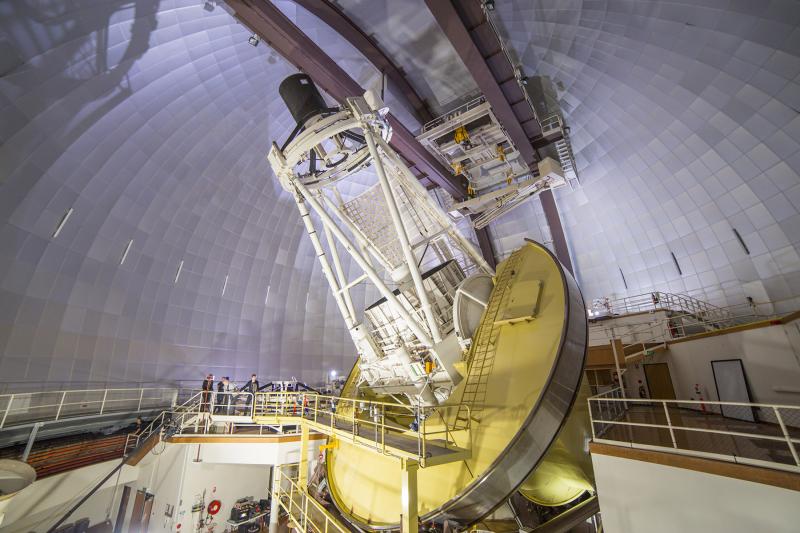
Colorful lights in dome of our Anglo-Australian Telescope in preparation for the Stargazing Live TV shows.

During two weeks in late March and early April 2017, famous physicist and TV presenter Professor Brian Cox co-hosted two “Stargazing TV” shows emitted live from Siding Spring Observatory in the BBC and in the ABC. The stage of these major TV events was our Anglo-Australian Telescope, (AAT) at Siding Spring Observatory, on the edge of the Warrumbungle National Park near Coonabarabran, NSW.

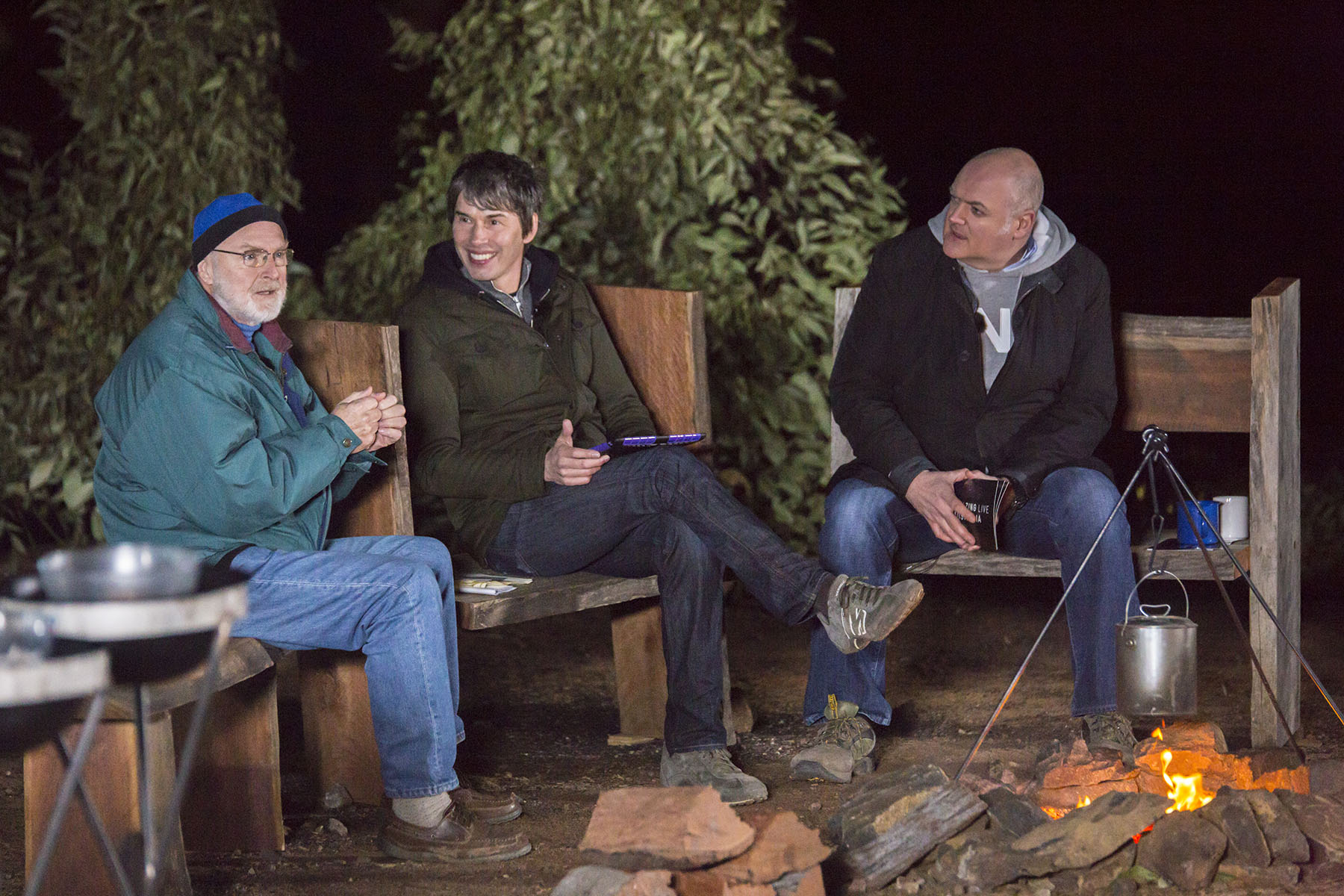
BBC Stargazing Live shows at Siding Spring Observatory were emitted on the early morning of Wednesday 29th, Thursday 30th and Friday 31st March 2017 (evenings of the previous days in the UK). BBC Stargazing Live TV shows were hosted by Professor Brian Cox and TV presenter and comedian Dara Ó Briain, with the participation of biologist and BBC presenter Liz Bonnin and Broome-based amateur astronomer Greg Quicke (who was very popular in social media, receiving the nickname of #SpaceGandalf).

During BBC Stargazing Live astrophysicist and science communicator Lisa Harvey-Smith (CSIRO) was also interviewed. Astronomer and journalist Chris Lintott (Oxford University) was in charge of reporting the news of the citizen science project “The Search for Planet 9“, led by astronomers at the Australian National University and launched in the first episode of BBC Stargazing Live. This citizen science project uses images taken with the Skymapper telescope at Siding Spring Observatory to search for a new planet in our Solar System.

#StargazingABC live episodes were emitted the following week (Tuesday 4th, Wednesday 5th and Thursday 6th April 2017). Hosts Professor Brian Cox and TV presenter Julia Zemiro were joined by astronomers to inspire Australia to explore our Universe and tackle astronomy’s most intriguing questions. Astronomer Lisa Harvey-Smith (CSIRO) also participated as TV presenter for the #StargazingABC shows.

AAO’s Fred Watson, Steve Lee and David Malin were interviewed several times during the ABC and BBC Stargazing Live shows.

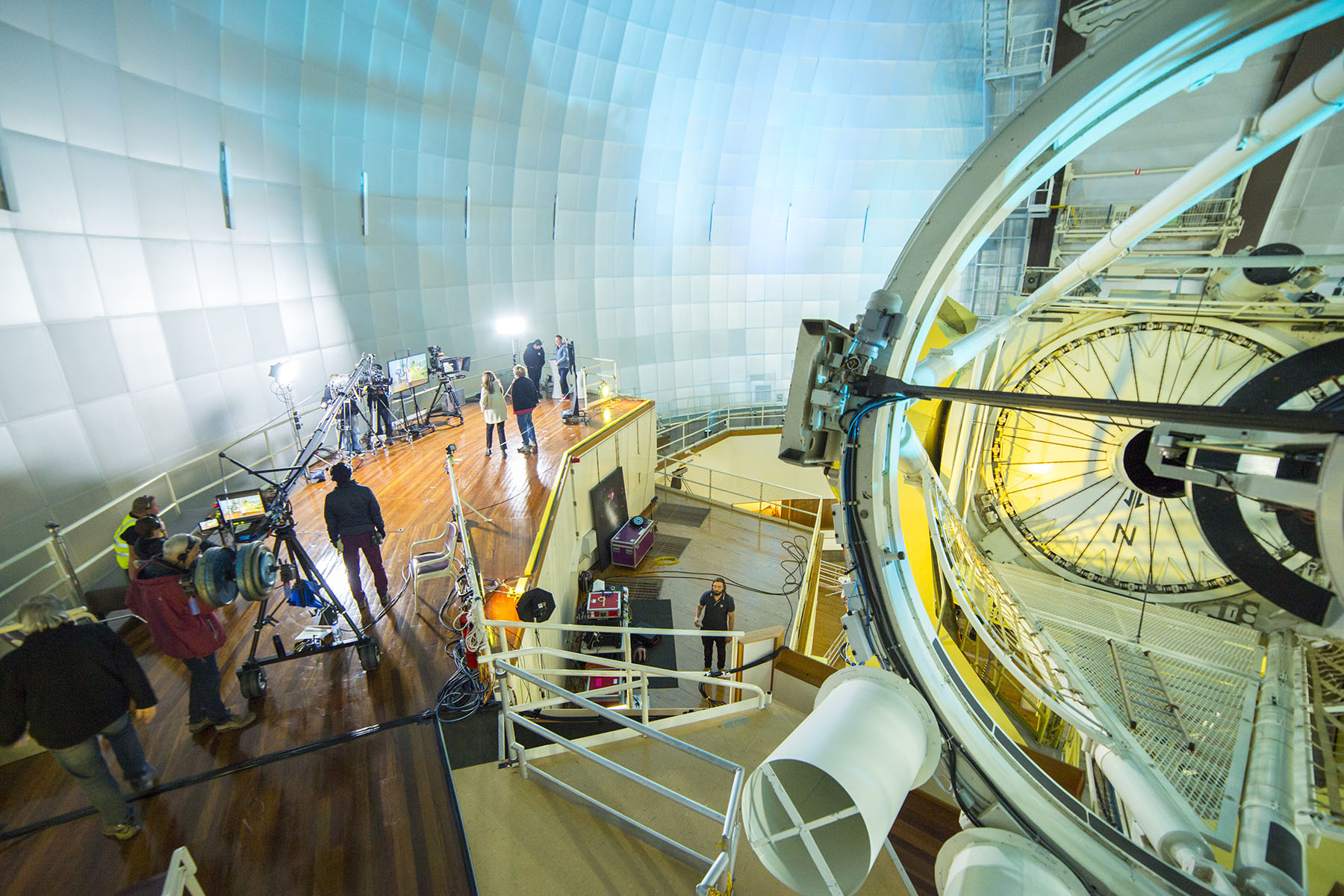
SAMI observers at the Anglo-Australian Telescope shared the dome with ABC crew while preparing instrument and telescope for observations on the afternoon of Sunday 2nd April.

For #StargazingABC first episode, the Milky Way, AAO astronomers Ángel López-Sánchez and Steve Lee prepared a new astronomical color image using data taken with the CACTI auxiliary camera of the AAT, which was broadcasted in the episode. This image shows Diffuse gas and dust in the heart of the Carina Nebula. The bright star is Eta Carinae, a massive double star at the end of its live that will soon explode as a supernova. The “Keyhole” is the dark cloud in the centre of the image.

Both Stargazing Live ABC events were very successful. #StargazingABC live episodes reached 2.7 million viewers across metro and regional Australia. They also had a huge impact in social media. ABC 1st TV episode reached over 240K people and had more than 8K reactions in Facebook, comments and shares, similar numbers to those obtained with ABC TV’s New Year’s Eve Family Fireworks stream. Regarding Twitter, the #StargazingABC hashtag reached 18.4 million users and produced 16.8K tweets from 6.3K unique contributors. 12.8K of these tweets were produced during the broadcasts, making #StargazingABC trend no.1 in Australia.

Credits of all the photos: Ángel R. López-Sánchez.

More information: AAO news: ABC Stargazing Live at the AAT.

Timelapse: A SAMI night at the AAT

See below the new Media Release published by the AAO. This new timelapse video has been also used for StargazingBBC and StargazingABC on March and April 2017.

This new astronomical time-lapse video features the unique SAMI (Sydney-AAO Multi-object Integral-field unit) instrument at the Anglo-Australian Telescope and the beauty of the dark sky over Siding Spring Observatory.

One of the most powerful instruments at the Anglo-Australian Telescope (Siding Spring Observatory, NSW) is the Sydney-AAO Multi-object Integral-field unit (SAMI). SAMI provides 13 fibred based IFUs called “hexabundles” that can “dissect” astronomical objects using spectroscopy. This instrument is used by the SAMI Galaxy Survey, that aims to “dissect” 3000 galaxies in different environments to help astronomers understand galaxy evolution and the tight relationship between gas and stars in galaxies.

However, unlike what the 2dF robot does, SAMI hexabundles must be plugged and unplugged manually very carefully by an expert user.

This video tells the story of a typical observing night with SAMI at the Anglo-Australian Telescope. In the first part, observers carefully prepare the SAMI instrument unplugging the plate they observed the previous night and plugging a complete new plate to be observed that night. SAMI observers usually need half an hour to complete this task, but in this timelapse video it is done in just a minute. Later they move to the AAT Control Room and start observations just as the sun sets. The twilight moves to a moonless, dark night, when only the stars shine over the Anglo-Australian Telescope, providing an spectacular view of the night sky from the Southern Hemisphere, and clear skies for the SAMI Galaxy Survey team to dissect distant galaxies.

In this timelapse you will see the Milky Way rising and setting, the Southern Cross with the Coalsack, the globular cluster 47 Tucanae near the Small Magellanic Cloud, the Large Magellanic Cloud with its strong star-forming region the Tarantula Nebula (30 Doradus), star clusters like the Pleiades moving behind the AAT, Orion rising and setting, the Carina Nebula rising, the magestic Emu in the Sky, and circumpolar stars (with the International Space Station) turning above the dome of the Anglo-Australian Telescope.

All the sequences have been filmed and processed in high resolution (4K) by astronomer Ángel R. López-Sánchez (Australian Astronomical Observatory / Macquarie University) while observing at the AAT for the SAMI Galaxy Survey, between September 2015 and March 2017. He used a CANON 5D Mark III with different lenses, all at f2.8. The night sequences tipically have 24 frames per second, each frame lasting 30 seconds in real time. Therefore 1 second of the night sequences corresponds to 12 minutes in real time.

To enjoy this video, watch it in full screen and at least in Full-HD (4K resolution recommended), in a dark room. As in real live, the details in the sky appear when we are far from the light pollution.

Credits of the video: Ángel R. López-Sánchez (Australian Astronomical Observatory / Macquarie University)
Featuring: Luca Cortese (ICRAR-UWA), Jesse van de Sande (University of Sydney) and Steve Chapman (Night Assistant at the AAT)
SAMI plugger: Ángel R. López-Sánchez (AAO/MQU)
Music: It’s personal (World in flames, 2011), Celestial Aeon Project.

Image

Eta Carinae and the Keyhole Nebula

Eta Carinae and the Keyhole Nebula

Diffuse gas and dust in the heart of the Carina Nebula. The bright star is Eta Carinae, a massive double star at the end of its live that will soon explode as a supernova. The “Keyhole” is the dark cloud in the centre of the image.

Image obtained as part of the “ABC Stargazing Live” events at Siding Spring Observatory (NSW, Australia), 4 – 6 April 2017.

Data taken on 3rd April 2017 using the CACTI camera in 2dF at the 3.9m Anglo-Australian Telescope. Color image using B (12 x 60s, blue) + [O III] (12 x 60 s, green) + Hα (12 x 60 s, red) filters.

More sizes and high-resolution image in my Flickr.

Credit: Ángel R. López-Sánchez (Australian Astronomical Observatory and Macquarie University), Steve Lee, Robert Patterson & Robert Dean (AAO), Night assistant at the AAT: Wiston Campbell (AAO).